
Today is May 30, 2026, and it’s hard to miss the buzz around Jupiter Island, a slice of paradise that’s home to celebrities like Tiger Woods and Venus Williams. But beneath the shiny surface lies a pressing issue that’s turning heads—and not just for the glitzy homes. The Florida Department of Environmental Protection (FDEP) recently completed a Vulnerability Assessment in March, shedding light on some serious risks that this affluent area faces due to flooding and coastal erosion.
According to the assessment, critical assets on Jupiter Island are at risk. We’re talking about stormwater facilities, historic sites, conservation lands, a government facility, and even the Emergency Operations Center. It’s a lot to lose! A separate FDEP report highlighted that over 11 miles of the island’s shoreline are critically eroded. This erosion is so severe that it raises concerns about a potential breach through Peck Lake into Hobe Sound. Local resident Fonda Cash has voiced her worries about the situation, especially with the wet conditions expected this year.
Erosion and Its Impact
Alex Brentworth, a beachgoer, likened the situation to a “tug of war”—nature pulling away at the land while humans scramble to hold on. Longtime resident Harry MacArthur reminisced about a storm in the early 1960s that opened Peck Lake into an inlet, and it seems history could repeat itself. Erosion is not just a property issue; it threatens wildlife habitats and is even partially destroying the Joseph Reed Mound, an archaeological site over 3,000 years old. The situation is dire, and MacArthur emphasized the need for immediate action.
Interestingly, this isn’t the first time Jupiter Island has faced challenges from the sea. The island has been utilizing beach renourishment since the 1950s to combat erosion. Yet, despite spending over $37 million on renourishment projects—adding more than 25 million cubic yards of sand—critics argue that this approach may not be effective in the long run. Rising sea levels and extreme weather events, exacerbated by climate change, are complicating matters. As noted in a TCPalm analysis, the costs and frequency of these renourishment efforts have increased over time, putting more strain on local resources.
Funding and Future Prospects
With the Vulnerability Assessment in hand, Jupiter Island is now better positioned to seek state funding for flood mitigation and infrastructure projects. Local leaders are eager to pursue both state and federal assistance to tackle these pressing issues. Just down the road, Martin County is feeling the pinch too, with 84% of its shoreline critically eroded. The county has spent nearly $39.3 million on renourishment projects, and they’re not alone—coastal assessments indicate that Florida, as a whole, is facing a daunting future.
Researchers warn that millions of people in Florida could lose their homes due to rising sea levels. According to NOAA, we could see sea levels rise at least 30 cm over the next 17 years. If emissions aren’t curbed, that figure could shoot up to two meters by 2100! Florida is already bearing the brunt of extreme weather events, and the aftermath of Hurricane Ian in September 2022 is still fresh in everyone’s minds. The rebuilding efforts are ongoing, but the threat is very real.
Despite these mounting challenges, Florida continues to attract new residents. In fact, 319,000 Americans moved to the state in 2022 alone! It’s a curious contradiction—people flock to the Sunshine State even as scientists warn that coastal cities like Miami, Fort Lauderdale, Tampa, and Jacksonville are particularly vulnerable. The allure of palm trees and warm weather seems to outweigh the looming threat of rising tides. Yet, with every new headline about coastal erosion and flooding, it’s a stark reminder that paradise can come at a price.
For more detailed insights into the situation, you can check out the full reports from the Florida Department of Environmental Protection and other sources, such as WFLX and USA Today.
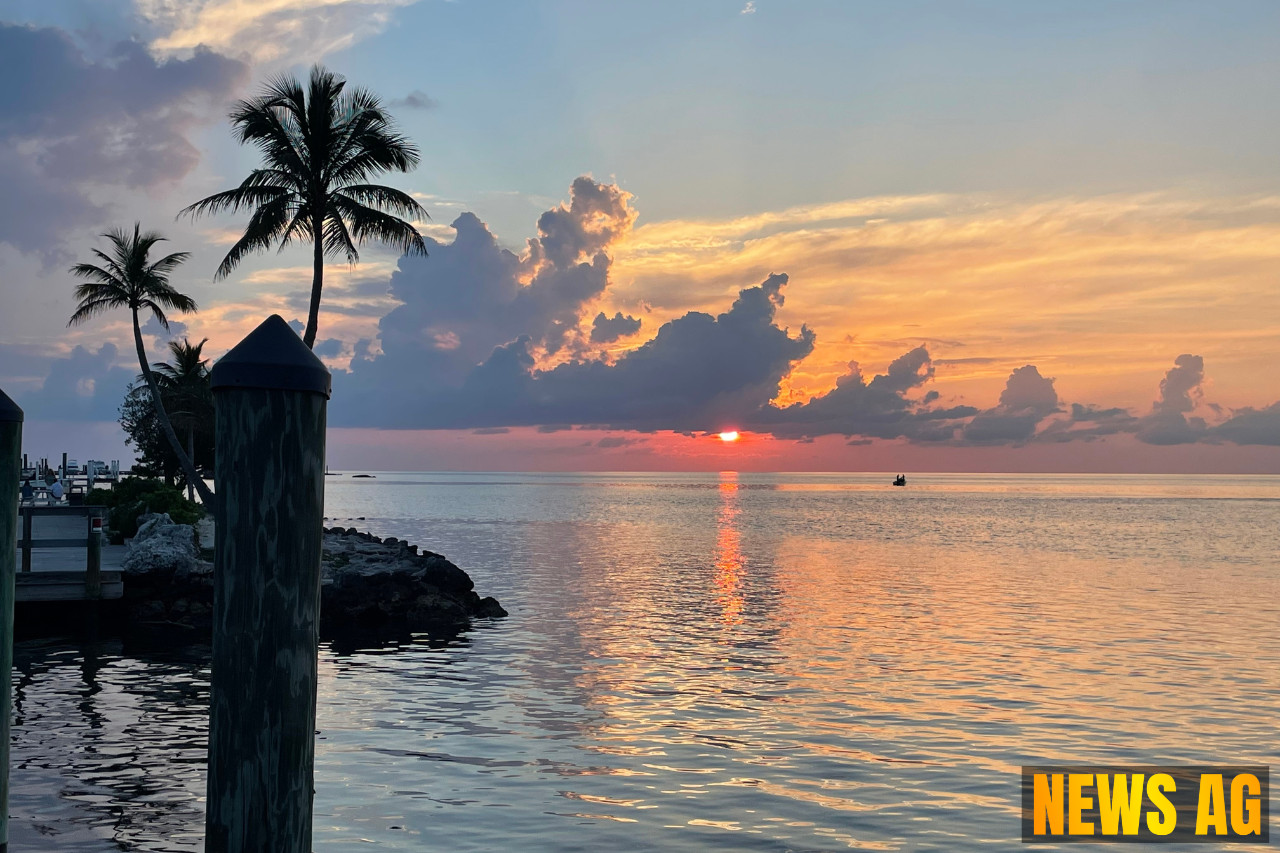
As the sun sets on another day in Jupiter Island, the tides may be changing—not just in the ocean, but in the lives of those who call this stunning place home.